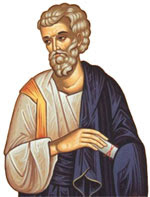
+BARTHOLOMEW
By the Mercy of God
Archbishop of Constantinople, New Rome and Ecumenical Patriarch
To the Plenitude of the Church
Grace, peace and mercy from the Savior Christ, born in Bethlehem
Beloved brethren and children in the Lord,
The great and sacred day of Christmas has dawned, the metropolis and mother of all feasts, inviting each of us to spiritual uplifting and encounter with the Ancient of Days, who became an infant for us.
As St. John of Damascus underlines: “By the grace of God the Father, the only begotten Son and divine Word of God, who is in the bosom of the Father, consubstantial with the Father and the Holy Spirit, the pre-eternal and perfect God, who is without beginning, condescends to us as His servants, becoming fully human and achieves that which is newer than new, the only new thing under the sun.” (On the Orthodox Faith) This incarnation of the Son of God is not merely symbolical, like the other incarnations of the numerous gods in mythology; it is reality, a truly new reality, the only new thing under the sun, which occurred at a specific historical moment in the reign of the Emperor Octavian Augustus some 746 years (according to new astronomical data) since the establishment of Rome, in the midst of a specific people, from the house and line of David (Luke 2.4), in a specific place, namely Bethlehem of Judaea, with a very specific purpose: “He became human in order that we might become divine,” in accordance with the succinct expression of Athanasius the Great. (On the Divine Incarnation 54)
The event of incarnation of God’s Word grants us the opportunity to reach the extreme limits of our nature, which are identified neither with the “good and beautiful” of the ancient Greeks and the “justice” of the philosophers, nor with the tranquility of Buddhist “nirvana” and the transcendental “fate” or so-called “karma” by means of the reputedly continuous changes in the form of life, nor again with any “harmony” of supposedly contradictory elements of some imaginary “living force” and anything else like these. Rather, it is the ontological transcendence of corruption and death through Christ, our integration into His divine life and glory, and our union by grace through Him with the Father in the Holy Spirit. These are our ultimate limits: personal union with the Trinitarian God! And Christ’s nativity does not promise any vague blessedness or abstract eternity; it places “in our hands” the potential of personal participation in God’s sacred life and love in an endless progression. It grants us the possibility not only “of receiving adoption” (Gal. 4.5) but also of becoming “partakers of divine nature.” (2 Peter 1.4).
Of course, amid the global confusion and crisis of our time, these truths have a strange echo. Most people’s hope, resting on worldly “deities,” is falsified on a daily basis in the most terrible ways. The human person is humiliated and crushed by numbers, machines, computers, stock markets, and diverse flags of vain ideological opportunism. Nature is blasphemed; the environment groans; young people despair and protest against the injustice of the present and the uncertainty of the future. “Darkness, clouds, storms and noise” (Deut. 4.11) prevail in our world, giving the impression that even the light of hope that dawns in Bethlehem is threatened with extinction and the angelic hymn of universal joy – “Glory to God in the highest and on earth peace, good will to all people” (Luke 2.14) – is in danger of being overcome. Nevertheless, the Church calls everyone to sober attention, re-evaluation of priorities in life, and pursuit of divine traces and value in every other person of respect toward the image of God. Indeed, the Church will not cease to proclaim – with all the strength acquired by its two millennia of experience – that the child that lies in the manger of Bethlehem is “the hope of all ends of the earth,” the Word and purpose of life, redemption sent by God to His people, namely to the whole world.
We share this good news with much love from the martyric Throne of the Great Church of Christ in Constantinople, proclaiming it to all children of the Ecumenical Patriarchate and to every person that thirsts for Christ, invoking upon all of you the mercy, peace and grace of God, together with the saving gift of the only-begotten Son of God, who came down from the heavens – for us and for our salvation – and was incarnate of the Holy Spirit and the Virgin Mary, becoming human. To Him belong the glory, power, honor and worship, together with the Father and the Holy Spirit, to the ages.
At the Phanar, Christmas 2008
Fervent supplicant to God for all
Bartholomew, Archbishop of Constantinople, New Rome and Ecumenical Patriarch
Showing posts with label Greek. Show all posts
Showing posts with label Greek. Show all posts
Monday, December 22, 2008

Wednesday, September 10, 2008
Accountability
Well I have decided to take up a new hobby! Learning classical, Koine, and Medieval Greek. Admittedly, not quite as easy as some of my other hobbies. It is mostly due to being a theology and philosophy undergrad without the ability to read key texts in both fields is quite rediculous. It is also partially a chance for me to work on my own discipline with studies. So whoever is reading this on the series of tubes , wish me luck.
Tuesday, September 9, 2008
: (
International Herald Tribune
Orthodox Christianity under threat
By Nicholas Gage
Monday, September 8, 2008
When Prime Minister Recep Tayyip Erdogan of Turkey and his Islamic-rooted party came under fierce fire this summer from secularists, who came close to persuading the country's supreme court to bar both from politics, he called the campaign an attack against religious freedom and a threat to Turkey's efforts to join the European Union.
Yet in nearly six years in power, Erdogan has shown no inclination to extend even a modicum of religious freedom to the most revered Christian institution in Turkey - the Patriarchate of Constantinople, the spiritual center of 300 million Orthodox Christians throughout the world. As a result, Turkey's persecution of the Patriarchate looms as a major obstacle to its European aspirations, and rightly so.
The Ecumenical Patriarchate, which was established in the fourth century and once possessed holdings as vast as those of the Vatican, has been reduced to a small, besieged enclave in a decaying corner of Istanbul called the Phanar, or Lighthouse. Almost all of its property has been seized by successive Turkish governments, its schools have been closed and its prelates are taunted by extremists who demonstrate almost daily outside the Patriarchate, calling for its ouster from Turkey.
The ecumenical patriarch, Bartholomew I, is often jeered and threatened when he ventures outside his walled enclave. He is periodically burned in effigy by Turkish chauvinists and Muslim fanatics. Government bureaucrats take pleasure in harassing him, summoning him to their offices to question and berate him about irrelevant issues, blocking his efforts to make repairs in the few buildings still under his control, and issuing veiled threats about what he says and does when he travels abroad.
Successive Turkish governments have followed policies that deliberately belittle the patriarch, refusing to recognize his ecumenical status as the spiritual leader of a major religious faith but viewing him only as the head of the small Greek Orthodox community of Istanbul.
Last year 42 of the 50 members of the Foreign Affairs Committee of the U.S. House of Representatives sent a letter to Erdogan urging his government to "end all restrictions" on the religious freedom of the Patriarchate, described by Tom Lantos, who then chaired the committee, as "one of the world's oldest and greatest treasures." The congressmen urged the Turkish government to join the rest of the world in recognizing the ecumenical standing of the Patriarchate, to return expropriated property, to reopen its schools, including the renowned theological seminary on the island of Halki, and to end all interference in the process of selecting the patriarch, particularly the "continued insistence that he be a Turkish citizen."
As Orthodox Christians have been systematically persecuted in Turkey and there are now less than 2,500 of them left in the country, the congressmen wrote, the Patriarchate will soon cease to exist if future patriarchs have to be Turkish citizens. "It is the church, not the Turkish state, that should determine who becomes ecumenical patriarch," their chairman declared.
Despite their letter and other efforts by statesmen from many countries to try to persuade the Turkish government to liberalize their policies toward the Patriarchate, its leaders have not budged - even though they know their stand may harm their chances of entering the European Union.
Their intransigence clearly demonstrates that while they want to enter Europe for its economic advantages, they are not prepared to liberalize their policies enough to alleviate Western concerns about allowing them to join. Until Turkey moves to make the fundamental changes necessary, starting with its policies toward the Patriarchate, admission of the country into the EU will pose major risks.
When I was covering Turkey for The New York Times in the late 1970s, its population was 34 million. Today it is 71 million and growing, while the birthrate in Europe is falling precipitously. In addition, Turkey's combined troop strength of 1.1 million overwhelms the armed forces of even the biggest European nations. If Turkey becomes a full member of the European Union, will it accommodate to Europe's liberal traditions or will it use its demographic and military prowess to bend Europe to its will? The EU has already ruled that Turkey must allow the ships of Cyprus, an EU member, to use Turkish ports, but Turkey has completely ignored the ruling despite its eagerness to join Europe. So the key question is whether Turkey is willing to adapt to Europe or wants only to join the EU on its own terms. It is crucial for Europe to know Turkey's real intentions before opening its doors to the country.
Turkey's treatment of the Patriarchate, therefore, must remain a litmus test of its readiness to join the European Union. If Turkey cannot recognize the value of "one of the world's oldest and greatest treasures" in its own midst, how can it be expected to appreciate and respect the liberal values and traditions that define Europe? If Turkey insists on entering Europe on its own inflexible terms, the danger that it will overwhelm Europe, engulf it and change it radically cannot be underestimated.
The Patriarch of Constantinople himself has said that he believes the risk is worth taking and that he strongly supports Turkey's admission. I, too, believe that Turkish membership holds great benefits for all concerned, especially the Turkish people, but not as Turkey is constituted today - intolerant, suspicious, inflexible.
For Turkey to join Europe, it must show that it is ready to take great strides in adopting a European outlook, not the baby steps it has taken until now. The best way to begin is with the Patriarchate at the Phanar, "the Lighthouse," which can become a beacon to light a path for Turkey into Europe, if only the country's leaders find the wisdom to see it.
Nicholas Gage writes often about the Eastern Mediterranean.
Orthodox Christianity under threat
By Nicholas Gage
Monday, September 8, 2008
When Prime Minister Recep Tayyip Erdogan of Turkey and his Islamic-rooted party came under fierce fire this summer from secularists, who came close to persuading the country's supreme court to bar both from politics, he called the campaign an attack against religious freedom and a threat to Turkey's efforts to join the European Union.
Yet in nearly six years in power, Erdogan has shown no inclination to extend even a modicum of religious freedom to the most revered Christian institution in Turkey - the Patriarchate of Constantinople, the spiritual center of 300 million Orthodox Christians throughout the world. As a result, Turkey's persecution of the Patriarchate looms as a major obstacle to its European aspirations, and rightly so.
The Ecumenical Patriarchate, which was established in the fourth century and once possessed holdings as vast as those of the Vatican, has been reduced to a small, besieged enclave in a decaying corner of Istanbul called the Phanar, or Lighthouse. Almost all of its property has been seized by successive Turkish governments, its schools have been closed and its prelates are taunted by extremists who demonstrate almost daily outside the Patriarchate, calling for its ouster from Turkey.
The ecumenical patriarch, Bartholomew I, is often jeered and threatened when he ventures outside his walled enclave. He is periodically burned in effigy by Turkish chauvinists and Muslim fanatics. Government bureaucrats take pleasure in harassing him, summoning him to their offices to question and berate him about irrelevant issues, blocking his efforts to make repairs in the few buildings still under his control, and issuing veiled threats about what he says and does when he travels abroad.
Successive Turkish governments have followed policies that deliberately belittle the patriarch, refusing to recognize his ecumenical status as the spiritual leader of a major religious faith but viewing him only as the head of the small Greek Orthodox community of Istanbul.
Last year 42 of the 50 members of the Foreign Affairs Committee of the U.S. House of Representatives sent a letter to Erdogan urging his government to "end all restrictions" on the religious freedom of the Patriarchate, described by Tom Lantos, who then chaired the committee, as "one of the world's oldest and greatest treasures." The congressmen urged the Turkish government to join the rest of the world in recognizing the ecumenical standing of the Patriarchate, to return expropriated property, to reopen its schools, including the renowned theological seminary on the island of Halki, and to end all interference in the process of selecting the patriarch, particularly the "continued insistence that he be a Turkish citizen."
As Orthodox Christians have been systematically persecuted in Turkey and there are now less than 2,500 of them left in the country, the congressmen wrote, the Patriarchate will soon cease to exist if future patriarchs have to be Turkish citizens. "It is the church, not the Turkish state, that should determine who becomes ecumenical patriarch," their chairman declared.
Despite their letter and other efforts by statesmen from many countries to try to persuade the Turkish government to liberalize their policies toward the Patriarchate, its leaders have not budged - even though they know their stand may harm their chances of entering the European Union.
Their intransigence clearly demonstrates that while they want to enter Europe for its economic advantages, they are not prepared to liberalize their policies enough to alleviate Western concerns about allowing them to join. Until Turkey moves to make the fundamental changes necessary, starting with its policies toward the Patriarchate, admission of the country into the EU will pose major risks.
When I was covering Turkey for The New York Times in the late 1970s, its population was 34 million. Today it is 71 million and growing, while the birthrate in Europe is falling precipitously. In addition, Turkey's combined troop strength of 1.1 million overwhelms the armed forces of even the biggest European nations. If Turkey becomes a full member of the European Union, will it accommodate to Europe's liberal traditions or will it use its demographic and military prowess to bend Europe to its will? The EU has already ruled that Turkey must allow the ships of Cyprus, an EU member, to use Turkish ports, but Turkey has completely ignored the ruling despite its eagerness to join Europe. So the key question is whether Turkey is willing to adapt to Europe or wants only to join the EU on its own terms. It is crucial for Europe to know Turkey's real intentions before opening its doors to the country.
Turkey's treatment of the Patriarchate, therefore, must remain a litmus test of its readiness to join the European Union. If Turkey cannot recognize the value of "one of the world's oldest and greatest treasures" in its own midst, how can it be expected to appreciate and respect the liberal values and traditions that define Europe? If Turkey insists on entering Europe on its own inflexible terms, the danger that it will overwhelm Europe, engulf it and change it radically cannot be underestimated.
The Patriarch of Constantinople himself has said that he believes the risk is worth taking and that he strongly supports Turkey's admission. I, too, believe that Turkish membership holds great benefits for all concerned, especially the Turkish people, but not as Turkey is constituted today - intolerant, suspicious, inflexible.
For Turkey to join Europe, it must show that it is ready to take great strides in adopting a European outlook, not the baby steps it has taken until now. The best way to begin is with the Patriarchate at the Phanar, "the Lighthouse," which can become a beacon to light a path for Turkey into Europe, if only the country's leaders find the wisdom to see it.
Nicholas Gage writes often about the Eastern Mediterranean.
Subscribe to:
Posts (Atom)
Blessed Constantine XI

Mar Isaac of Syria

St. Gregory Palamas